


Azienda Agricola “Il Giardino” di Sergio Falzari
via del Fondaccio 19, 50059 Vinci (FI), Tuscany
Tel: +39 329 6354731 (Sergio) – +39 339 7038497 (Roberto)
Contact – Website: www.vini-falzari.it

Owners and winemakers: Sergio and Roberto Falzari
In 2001 we vinified in our newly built cellar; at that time it was a conventional agriculture.
In 2002 we moved to integrated agriculture.
In August 2004 we moved to organic agriculture.
In 2005 the official conversion to organic farming began and we are certified by ICEA as an organic farm from the 2007 harvest.
In March 2007 the transition to biodynamic agriculture took place, which we still practice today.
The farm covers an area of 15.15 hectares, on a hill about 60 meters above sea level, planted with vines, olive trees, arable land and a small orchard. There are 4.6 hectares of vineyards with Sangiovese, Merlot, Cabernet Sauvignon and Trebbiano grapes.
In the vineyard, we cultivate with the biodynamic method.
In winemaking, we do not use selected yeasts, enzymes or bacteria, no nutrients of the same, no type of aromatic additive.
ICEA organic certification
- Chianti D.O.C.G. Selengaia
- Rosso IGT Toscana Altrove
- Rosso IGT Toscana Pilandra
- Bianco IGT Toscana Tinnari
- Bianco IGT Toscana Assentada
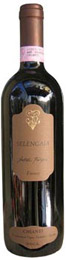
Chianti D.O.C.G. Selengaia
Grapes: 70% Sangiovese, 15% Cabernet Sauvignon, 15% Merlot
Vinification: For the alcoholic fermentation and all phases of production, no substances are used apart from minimal quantities of sulphites (total sulphurous dioxide in the bottled wine, max. 70 mg/l).
The grapes are left to macerate for 2-3 days. Alcoholic fermentation then takes place spontaneously, unless it is stimulated with the racking method. During fermentation, this involves pouring wine over the cap from 2 to 4 times a day. Once fermentation is complete, the skins are left to macerate for as long as possible, together with the racking method which is carried out several times each day as required. The length of time for which the liquid remains on the skins varies from 16 to 25 days depending on fermentation. The wine is then devatted manually. Malolactic fermentation occurs spontaneously. Both fermentation processes occur in stainless steel and cement vats.
Maturation: in steel and cement vats until ready for bottling
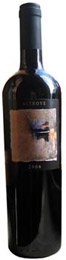
Rosso Toscana IGT Altrove
Grapes: 1/3 Sangiovese, 1/3 Cabernet Sauvignon, 1/3 Merlot
Vinification: For the alcoholic fermentation and all phases of production, no substances are used apart from minimal quantities of sulphites (total sulphurous dioxide in the bottled wine, max. 70 mg/l).
The grapes are left to macerate for 2-3 days prior to fermentation.
Alcoholic fermentation then takes place spontaneously, unless it is stimulated with the racking method. During fermentation, this involves pouring wine over the cap from 2 to 4 times a day. Once fermentation is complete, the skins are left to macerate for as long as possible, together with the racking method which is carried out several times each day as required. The length of time for which the liquid remains on the skins varies from 16 to 25 days depending on fermentation. The wine is then devatted manually. Malolactic fermentation occurs spontaneously. Both fermentation processes occur in stainless steel vats, which are also used subsequently to store the wine.
Maturation and aging: The wine is matured in French barriques which are either new or used (1 – 9 times) to limit any aroma which might be left in the wine by the wood, for 18-24 months.

Rosso Toscana IGT Pilandra
Grapes: Sangiovese
Vinification: For the alcoholic fermentation and all phases of production, no substances are used apart from minimal quantities of sulphites (total sulphurous dioxide in the bottled wine, max. 70 mg/l).
The grapes are left to macerate for 2-3 days prior to fermentation.
Alcoholic fermentation then takes place spontaneously, unless it is stimulated with the racking method. During fermentation, this involves pouring wine over the cap from 2 to 4 times a day. Once fermentation is complete, the skins are left to macerate for as long as possible, together with the racking method which is carried out several times each day as required. The length of time for which the liquid remains on the skins varies from 16 to 35 days depending on fermentation. The wine is then devatted manually. Malolactic fermentation occurs spontaneously. Both fermentation processes occur in stainless steel vats, then the wine is stored in cement vats.
Maturation and aging: maturation of about 80-90 % of wine in cement vats, while the rest is matured in French oak barriques, riasciate e slightly retoasted to limit any aroma which might be left in the wine by the wood.
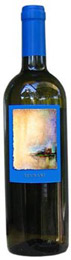
Bianco IGT Toscana Tinnari
Grapes: Trebbiano Toscano 100%
Vinification: After harvesting the grapes, they are left to macerate in a tank at a cool temperature, yet without the use of any refrigerating systems. This phase helps to develop the aromas and causes the natural clarification process. The grapes are then pressed and deseeded gently prior to fermentation.
The alcoholic fermentation of the “must” begins spontaneously and continues for about 20-25 days at a low temperature between 18° and 20°C. The next step involves the malolactic fermentation which serves to keep the wine stable over time. In fact, the malolactic fermentation prevents the risk of re-fermentation in the bottle which can consequently cause abnormal organoleptic values in the wine. If malolactic fermentation did not take place, it would be necessary to filter the wine using sterile methods to eliminate any bacterial agents which cause it. Such a refined filtering would also be traumatic for the wine, leaving it without texture and aroma. During the fermentation phase and all the subsequent production phases, no substances are used apart from minimal quantities of sulphites (total sulphurous dioxide in the finished wine: 70 mg/l). Sulphites may also be used, prior to bottling, if the analyses show any instability with regard to the proteins of bentonite (white clay), to make them precipitate in order to avoid any haziness or possible deposits in the bottle.
Maturation and aging: in steel and cement vats until the bottling stage
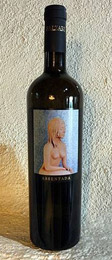
Bianco IGT Toscana Assentada
Grapes: Trebbiano Toscano 100%
Vinification: After the grapes are harvested, at the right degree of ripeness but still with good acidity, the grapes are crushed and destemmed and the pre-fermentation maceration in a Terracotta amphora follows. This phase helps the development of perfumes.
Alcoholic fermentation begins spontaneously, it is stimulated and then maintained with daily punching down of the amphora, at least two a day. Fermentation takes place at low temperatures (18 ° -20 ° C) controlled by the use of frozen water bottles, replaced twice a day.
Maturation and aging: In terracotta amphora and then in concrete vats.
Extra virgin olive oil
Bioagriturismo Il Fondaccio
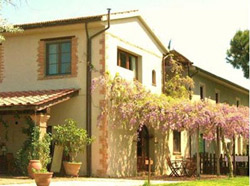 Agriturismo il Fondaccio Vinci
At our organic agriturismo “Il Fondaccio”, located amidst the rolling hills close to Vinci, the birthplace of the great Leonardo, our guests can enjoy a superb holiday and the best of natural, organic wine.
Apartments
All the apartments are two-roomed apartments composed of a nice living room with kitchenette, a double bedroom and a bathroom. The furnishings have been designed and chosen to create a comfortable and welcoming atmosphere, thanks to the search for a chromatic harmony of the rooms and the care for details.
Services
Garden and swimming pool, itineraries, activities and excursions…
Contact
Website: www.bioagriturismoilfondaccio.it
Email: info@fondaccio.it